
Internal States in Relationships: Why They Matter More Than the Situation
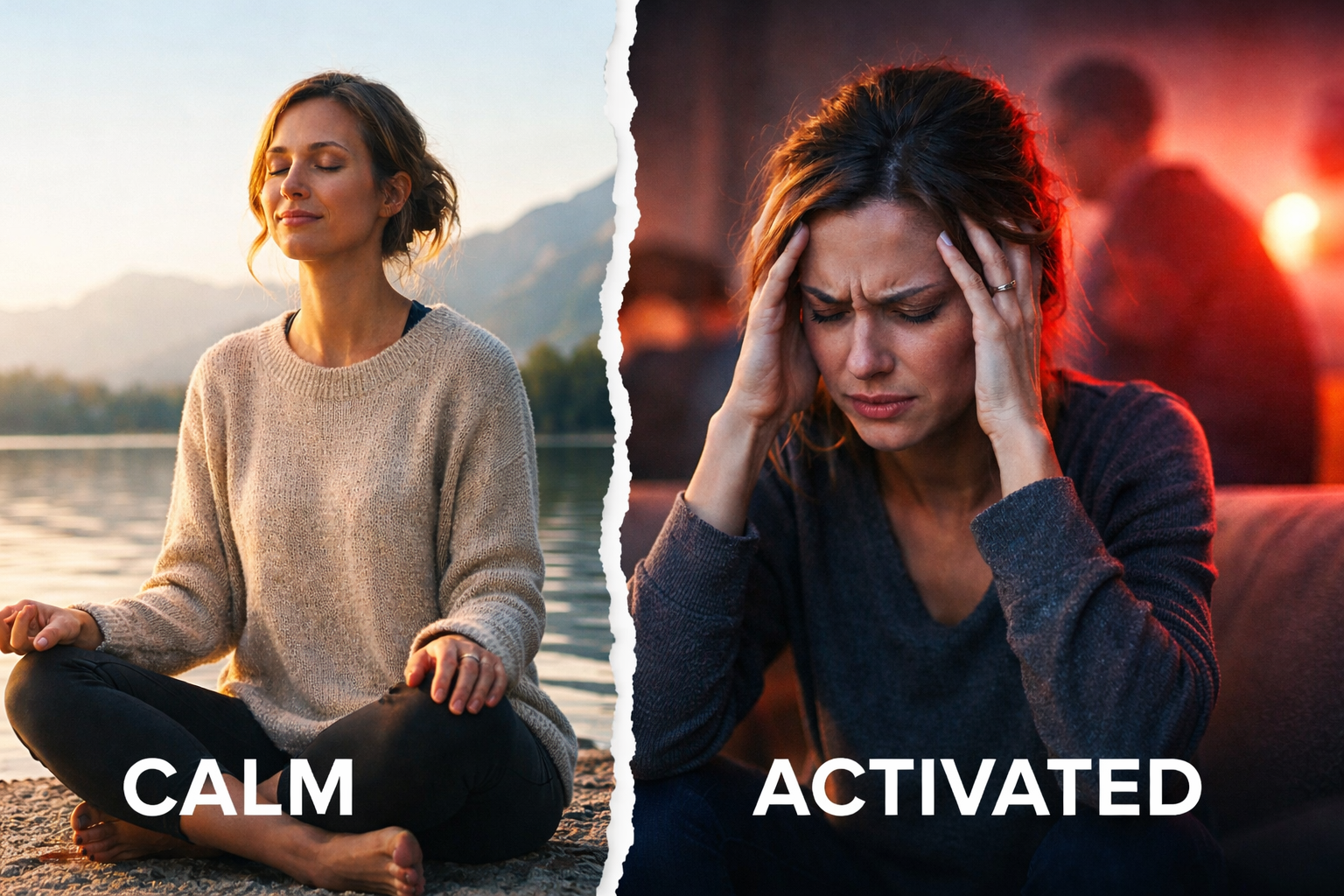
It’s Not Just What’s Happening—It’s the State You’re In
One of the biggest shifts I try to help people make is this:
It’s not just what’s happening—
it’s the state you’re in while it’s happening.
Two people can be in the exact same conversation
and walk away with completely different experiences.
Why?
Because their internal states are different.
What Is an Internal State?
Your internal state is the combination of what’s happening inside of you in any given moment.
It includes:
your nervous system (regulated or activated)
your emotions
your thoughts
your level of capacity in that moment
It becomes the lens through which everything gets interpreted.
And most of us don’t realize just how much that lens shapes what we see—and how we respond.
When Your Internal State Is Off, Everything Feels Off
You’ve probably had moments where something small suddenly feels big.
That’s often not just about the situation.
It’s about your state.
When you’re feeling anxious, overwhelmed, frustrated, or shut down, your system shifts into protection.
And from that place, it’s easy to:
assume the worst
take things personally
feel the need to defend, fix, or withdraw
say things you wouldn’t normally say
In those moments, it can feel like the situation itself is the problem.
But often, it’s the internal state shaping how the situation is being experienced.
Emotional Regulation Comes Before Resolution
This is something I come back to again and again in my work:
You can’t problem-solve well from a dysregulated state.
When your nervous system is flooded, your access to empathy, flexibility, and perspective narrows.
So instead of asking,
“How do we fix this right now?”
A more helpful question is:
“What state am I in—and what might help shift it?”
Sometimes that looks like pausing.
Sometimes it means taking a break, slowing your breathing, or giving yourself space before continuing the conversation.
This isn’t avoidance.
It’s creating the conditions where real understanding becomes possible.
Your Internal State Is Contagious
This is especially true in close relationships.
If one person becomes escalated, the other often feels it and reacts.
But the opposite is also true.
When one person begins to ground themselves, it can shift the entire dynamic.
You don’t control everything that happens in a relationship.
But you do influence the emotional tone more than you might think.
Awareness Is Where Change Begins
You don’t have to get this perfect.
This is about awareness, not perfection.
You might start by noticing:
When do I feel most like myself?
When do I lose access to that version of me?
What helps me come back?
Because the goal isn’t to never feel triggered.
The goal is to recognize it sooner—and find your way back more quickly.
Final Thought
Your internal state shapes your experience of everything.
Not just your relationships—
but your decisions, your reactions, and your sense of self.
So when something feels off, it can be powerful to pause and ask:
What’s happening inside of me right now?
That question alone can begin to shift the moment.
If you’re interested in understanding your relationship patterns more deeply, you can explore Susan’s programs at relationshipsolutionsprograms.com

Stay connected with news and updates!
Disclaimer
The views, opinions, and content expressed and produced by our guests do not necessarily reflect the views, opinions, or policies of Relationship Solutions Programs or Susan Regan. If you have any questions, concerns, or feedback regarding content, please contact Susan Regan.