
When You Don’t Know What Comes Next in Your Relationship
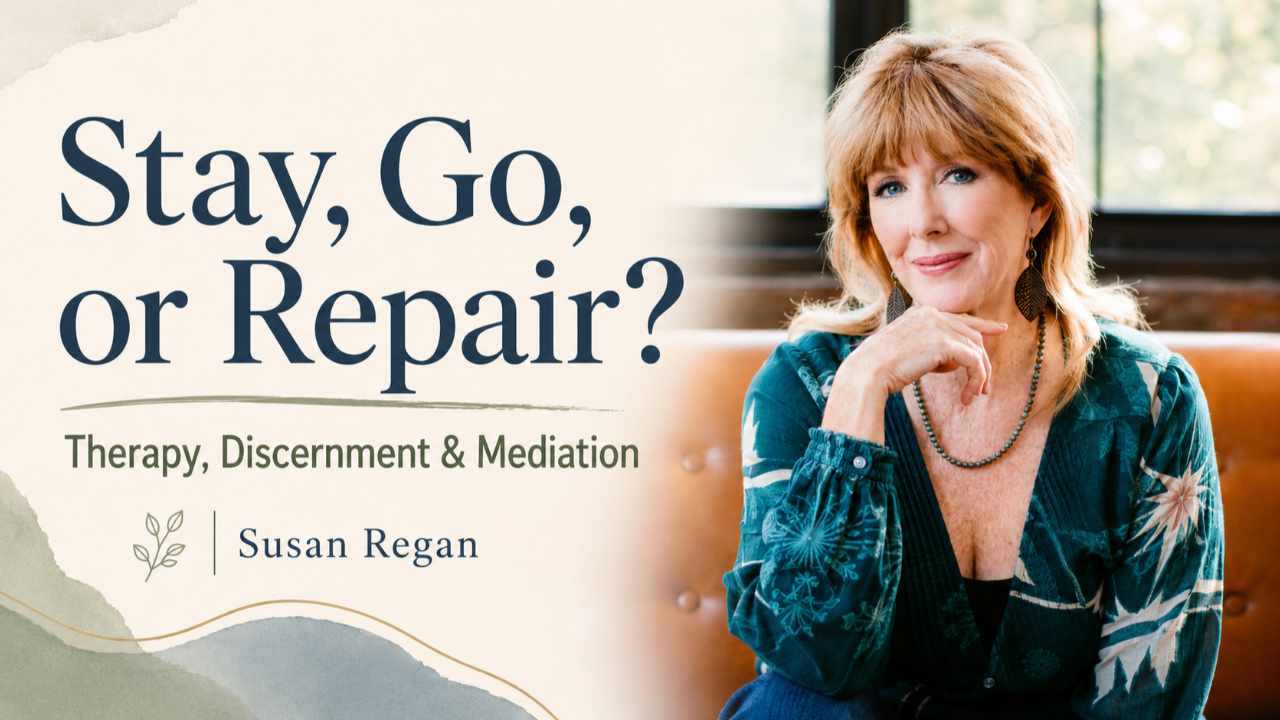
Most couples don’t arrive at a difficult moment with a clear plan.
They arrive overwhelmed.
One person may want to stay together. The other may be unsure. They may be arguing constantly, barely speaking, talking about separation, worried about their children, or simply exhausted from trying to figure out what to do.
And underneath all of that is often one very practical question:
What happens now?
That is where having one place to begin can make a meaningful difference.
My work with couples is designed to help people move from uncertainty into clarity — and then from clarity into a plan.
That plan may involve couples therapy.
It may involve discernment counseling.
It may involve mediation.
It may involve separation, co-parenting work, or rebuilding the relationship.
And sometimes the plan changes along the way.
The goal is not to push couples toward one particular outcome.
It is to help them understand where they are, determine what they need, and move forward thoughtfully with support.
You Don’t Have to Know What Kind of Help You Need
People often think they need to diagnose the situation before they reach out.
Do we need therapy?
Do we need mediation?
Are we trying to save the relationship?
Are we getting divorced?
Do we need discernment counseling?
But when you are inside the relationship, it can be very difficult to know.
That uncertainty is often part of the reason people seek help in the first place.
So the starting point is not necessarily choosing a service.
The starting point is understanding the situation.
What is happening between you?
Where is each person emotionally?
Are both of you interested in repairing the relationship?
Is one person leaning out while the other is trying desperately to hold on?
Are practical decisions about separation already on the table?
Are there children whose needs need to be considered?
What would need to change for the relationship to continue?
Those questions help us determine what kind of process will actually be useful.
Step One: Understand Where You Are
Before deciding what comes next, it helps to get a clearer picture of what is happening now.
Sometimes a couple comes in thinking they need communication help, but we discover that one partner is seriously questioning whether they want to remain in the relationship.
Sometimes divorce has been mentioned repeatedly, but neither person has really made a decision.
Sometimes both partners want to stay together, but they have become trapped in the same cycle of criticism, defensiveness, withdrawal, anger, or disconnection.
And sometimes the decision to separate has already been made, but the couple has no idea how to navigate the emotional, parenting, and practical realities ahead.
These are very different situations.
They require different kinds of support.
The first part of the work is figuring out what problem we are actually trying to solve.
If You’re Unsure Whether to Stay Together: Discernment
Discernment counseling can be especially useful when partners are not in the same place about the future of the relationship.
One person may want to work on the relationship.
The other may be leaning toward leaving.
Trying to jump straight into couples therapy can be frustrating in this situation because the couple has not yet agreed on the goal.
Discernment creates space to slow things down.
Instead of immediately asking, “How do we fix the relationship?” we first ask:
Do we want to try?
The process helps each partner look honestly at the relationship, their own contribution to its difficulties, and what they believe would need to change.
From there, couples generally move toward one of several paths.
They may decide to make a meaningful commitment to repairing the relationship.
They may decide to separate.
Or they may decide they are not ready to make a final decision yet.
The goal is clarity, not persuasion.
If You Decide to Work on the Relationship: Couples Therapy
If both partners decide they want to try to rebuild, couples therapy gives us a different goal.
Now we are no longer asking whether to work on the relationship.
We are asking:
What needs to happen for this relationship to become healthier?
And this is where my approach goes beyond simply talking about problems.
Talking is important.
Understanding the past is important.
Feeling heard is important.
But most couples already know what they argue about.
The more useful question is often:
What keeps happening between us when things become difficult?
Maybe one person pursues while the other retreats.
Maybe criticism leads immediately to defensiveness.
Maybe one partner becomes highly emotional while the other shuts down.
Maybe old injuries become activated by small moments in the present.
Maybe each person is protecting something vulnerable underneath the argument — fear of rejection, abandonment, failure, loss of control, or not being enough.
We work with those patterns directly.
That may include communication work, emotional regulation, exercises between sessions, structured conversations, insight into personality or attachment patterns, and specific changes the couple agrees to practice.
The work is active and purposeful.
It is not simply an ongoing conversation about the relationship.
There is a plan.
If You Decide to Separate: Mediation
Sometimes clarity leads in another direction.
A couple may decide that the relationship is ending.
At that point, the question changes from:
“How do we stay together?”
to:
“How do we move through this separation as thoughtfully as possible?”
Mediation can help couples work through the decisions that come with separation or divorce.
That may include parenting schedules, finances, property, communication agreements, household transitions, and other practical decisions.
But these conversations rarely feel purely practical.
A disagreement about a schedule may actually contain grief about losing everyday time with a child.
A financial discussion may trigger fear about security.
A disagreement about the family home may represent much more than the house itself.
This is why my background as both a therapist and mediator matters.
The emotional dynamic is not treated as irrelevant simply because we are discussing practical decisions.
We can pay attention to both.
The goal is to create workable agreements while helping people move through the process with as much clarity, dignity, and stability as possible.
And If You Have Children, the Relationship Is Changing — Not Disappearing
When children are involved, separation does not end the relationship entirely.
It changes it.
You are no longer functioning as romantic partners, but you are still parents.
That means another important part of the plan may involve co-parenting.
How will you communicate?
How will decisions be made?
How will transitions work?
What happens when one parent is angry with the other?
How do you protect your children from feeling caught between you?
The goal is not to pretend that separation is easy.
It is to build a new structure for the family that gives everyone the best possible chance to adjust.
Sometimes Couples Move Between These Processes
One of the reasons I offer therapy, discernment, mediation, and relationship support within the same practice is that real life does not unfold in neat categories.
A couple may begin in couples therapy and discover that one partner is more uncertain about staying than anyone realized.
At that point, discernment may make more sense.
A couple may begin discernment and decide to make a serious commitment to rebuilding.
Then we can move into couples therapy with a clearer purpose.
A couple may decide to separate and move into mediation.
During mediation, they may realize they need additional support around co-parenting or communication.
The process can evolve because the needs of the couple evolve.
You do not have to keep starting over with someone new every time the question changes.
The Common Thread Is a Plan
Whatever direction a couple ultimately chooses, I believe the work should be purposeful.
That means identifying the goal.
Understanding the patterns that are getting in the way.
Determining what decisions need to be made.
Creating concrete next steps.
And revisiting the plan when circumstances change.
Sometimes the plan is to repair the relationship.
Sometimes the plan is to make a thoughtful decision about whether to stay.
Sometimes the plan is to separate in a way that reduces unnecessary conflict.
Sometimes the plan is to build a healthy co-parenting relationship after the marriage ends.
Different outcomes require different kinds of work.
But uncertainty does not have to mean chaos.
There Is More Than One Successful Outcome
We often assume that successful couples work must end with two people staying together.
I don’t believe that is always true.
Sometimes success means a couple understands one another differently and chooses to rebuild.
Sometimes it means recognizing that the relationship has reached its end and separating thoughtfully.
Sometimes it means two people finally understanding the patterns that have kept them stuck.
Sometimes it means becoming better co-parents even though they are no longer partners.
And sometimes success begins simply with having enough clarity to make the next decision.
The point is not to predetermine the ending.
The point is to help you find the path that makes sense for your relationship and then support you as you walk it.
You Can Start Before You Know the Answer
You do not need to arrive knowing whether you need therapy, discernment, mediation, or something else.
You do not need to have decided whether you are staying together.
You do not need to have all of the practical details figured out.
You can begin with the uncertainty.
We can look at what is happening, clarify what you need, and create a plan from there.
Because sometimes the most important first step in a relationship isn’t knowing exactly where you are going.
It is knowing that you no longer have to figure out the entire path by yourselves.

Stay connected with news and updates!
Disclaimer
The views, opinions, and content expressed and produced by our guests do not necessarily reflect the views, opinions, or policies of Relationship Solutions Programs or Susan Regan. If you have any questions, concerns, or feedback regarding content, please contact Susan Regan.