
First Year of Divorce for Moms: 7 Challenges & How to Heal
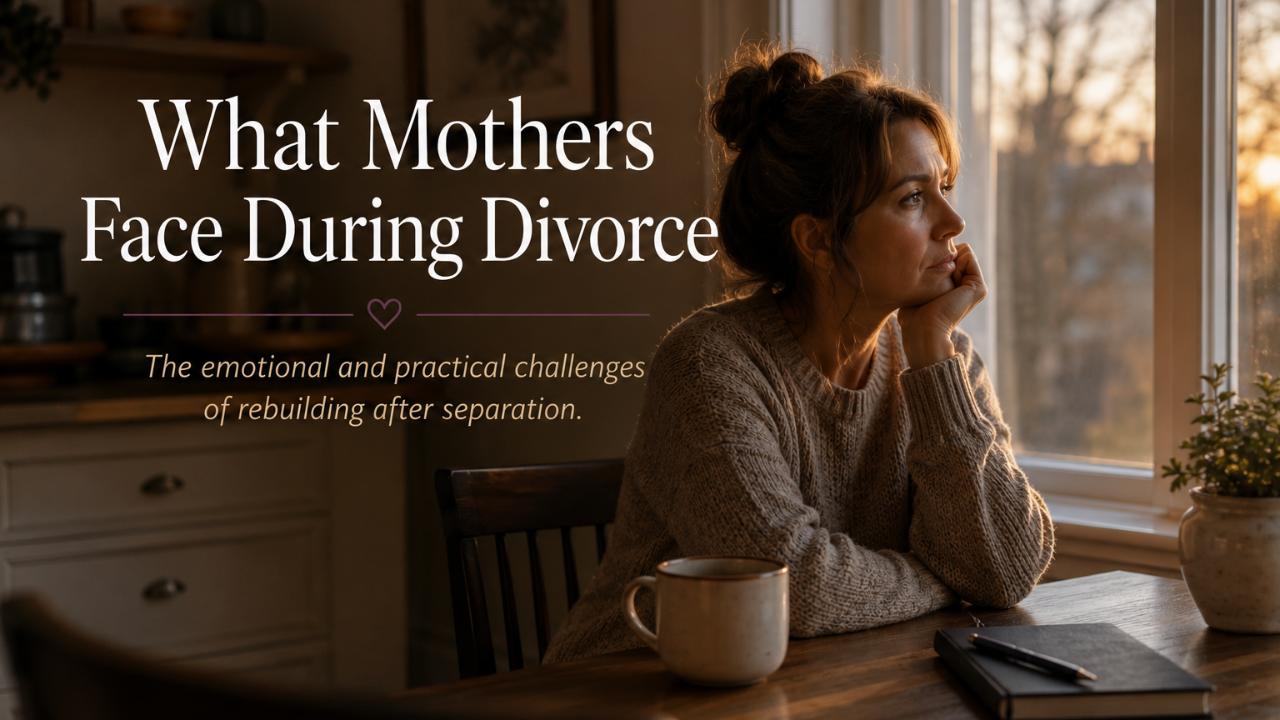
No one prepares you for the first year after divorce.
People tell you that "it gets better."
They remind you to "stay strong for the kids."
Friends encourage you to keep busy.
But very few people talk about what divorce actually feels like when you're the mother trying to hold everything together.
You're grieving the end of a marriage while making some of the biggest decisions of your life.
You're trying to support your children while your own emotions feel unpredictable.
You're managing schedules, finances, communication with your former partner, and an endless stream of logistics—often while wondering who you are now that life looks so different.
The truth is this:
Divorce isn't just the end of a relationship. It's a complete life transition.
And for mothers, the first year often brings emotional and practical challenges that no one can fully prepare you for.
Here are seven of the most common.
1. You're grieving—even if the divorce was your decision.
One of the biggest misconceptions about divorce is that the person who initiated it doesn't experience grief.
Nothing could be further from the truth.
You may grieve:
-
The family you imagined.
-
The future you planned.
-
The routines your children depended on.
-
The partnership you hoped would improve.
-
The version of yourself who believed things would turn out differently.
Grief isn't a sign you made the wrong decision.
It's a sign that something important has changed.
Allowing yourself to acknowledge that loss is one of the first steps toward healing.
2. You're expected to keep everyone else emotionally afloat.
As a mother, there's often an unspoken expectation that you'll become the emotional anchor for everyone else.
Your children are looking to you for reassurance.
Family members have questions.
Friends want updates.
Your former partner may still be creating conflict.
Meanwhile, you're trying to hide your own fears because you don't want your children to worry.
This emotional labor is exhausting.
Many mothers become so focused on everyone else's well-being that they stop noticing their own.
3. Every decision suddenly feels overwhelming.
Divorce creates decision fatigue.
Questions seem endless:
How do I tell the kids?
Should I keep the house?
What boundaries do I need with my ex?
How do holidays work?
When is it okay to date?
How do I manage two households?
Even small decisions can feel impossible because your nervous system is already carrying so much.
This is why support matters.
Sometimes what people need isn't someone to tell them what to do—they need someone to help them think clearly again.
4. Co-parenting is about much more than a calendar.
Many people assume co-parenting is simply coordinating schedules.
In reality, it often involves ongoing communication with someone you may still be grieving, feeling hurt by, or trying to establish new boundaries with.
Every text message can trigger anxiety.
Every schedule change can reopen old wounds.
Healthy co-parenting isn't about having no conflict.
It's about learning how to respond thoughtfully instead of reacting automatically.
That takes practice.
5. You begin wondering who you are now.
For many women, marriage and motherhood become deeply intertwined with identity.
When the marriage ends, it's common to ask:
"Who am I besides someone's wife?"
"What do I actually want?"
"What kind of life am I creating now?"
These questions can feel unsettling.
They can also become invitations to rediscover parts of yourself that may have been overlooked for years.
6. Relationships suddenly feel much more complicated.
At some point, many mothers begin thinking about dating again.
That thought often brings more questions than excitement.
How will this affect my children?
Can I trust again?
How do I avoid repeating the same relationship patterns?
Am I even ready?
Divorce doesn't just end one relationship.
It often reveals patterns that have existed for much longer.
Understanding those patterns creates the opportunity to make different choices moving forward.
7. You feel alone—even when people care about you.
This may be one of the hardest parts.
Friends mean well.
Family wants to help.
But unless someone has lived through divorce, they may not fully understand the complexity of what you're experiencing.
Many mothers tell me they feel isolated.
They don't want to burden their friends.
They don't want to keep talking about the divorce.
They worry people expect them to be "over it."
Healing isn't about getting over it.
It's about moving through it.
And that becomes much easier when you're surrounded by people who truly understand.
Why Support Matters During the First Year
The first year after divorce is about much more than surviving.
It's about learning how to navigate a completely new chapter of life.
That includes:
-
Understanding your emotional reactions.
-
Building healthy boundaries.
-
Developing effective co-parenting strategies.
-
Rebuilding your confidence.
-
Strengthening your relationship with yourself.
-
Preparing for future relationships with greater awareness.
Healing happens one conversation, one insight, and one small step at a time.
You don't have to figure everything out alone.
Strong Moms, New Chapters
That's why I created Strong Moms, New Chapters—an ongoing therapy process group for mothers navigating divorce, co-parenting, and family transitions.
This isn't simply a place to share your feelings.
It's a supportive, professionally facilitated space where you'll receive both emotional support and practical guidance for navigating the realities of life after divorce.
Together, we explore the challenges that mothers face every day—from boundaries and co-parenting to identity, new relationships, and blended family dynamics—while learning from one another in a safe, confidential environment.
Groups are intentionally kept small to encourage trust, meaningful connection, and thoughtful discussion. Each prospective member participates in a brief consultation to ensure the group is the right fit.
You Don't Have to Carry This Alone
One of the greatest gifts you can give yourself—and your children—is your own healing.
When you have support, you're better able to make thoughtful decisions, regulate difficult emotions, communicate more effectively, and create the kind of home your children need during times of change.
If you're navigating the first year after divorce, know this:
You don't have to have all the answers.
You don't have to be strong every moment.
And you don't have to go through it alone.
If you're ready for support, I'd love to help.
Learn more about Strong Moms, New Chapters and schedule a complimentary consultation to see if the group is the right fit for you.

Stay connected with news and updates!
Disclaimer
The views, opinions, and content expressed and produced by our guests do not necessarily reflect the views, opinions, or policies of Relationship Solutions Programs or Susan Regan. If you have any questions, concerns, or feedback regarding content, please contact Susan Regan.